
How the New Army Combat Field Test Could Add 4,000 Soldiers - and Keep Them Healthy
— 4 min read
Hook
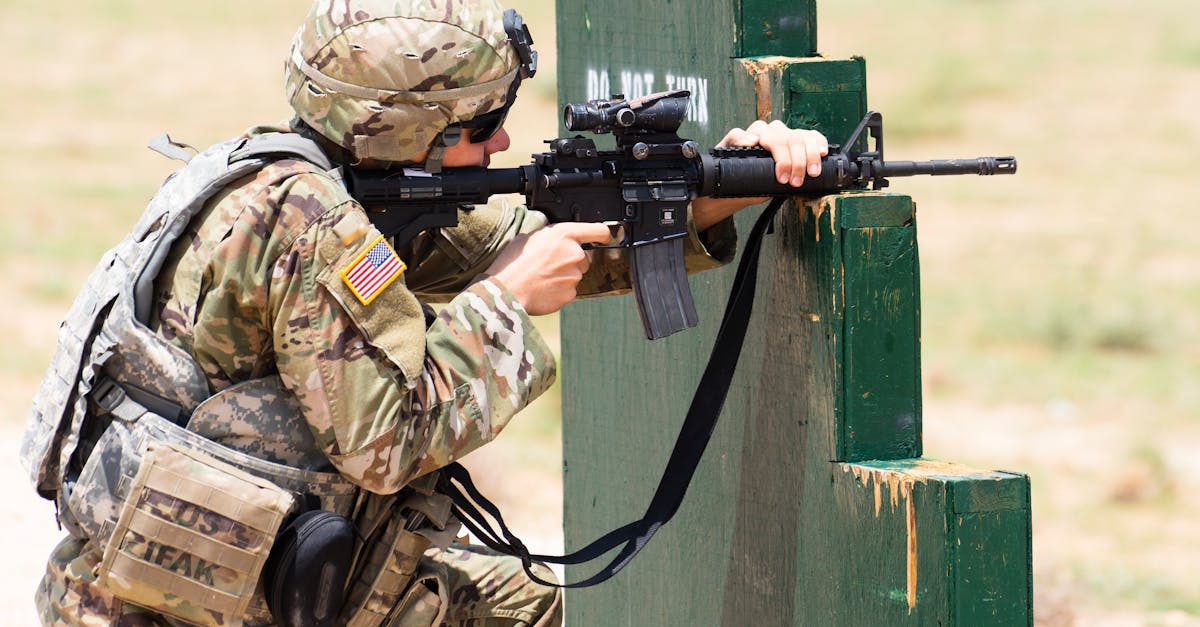
Picture this: a high school senior in Texas, fresh out of football season, is handed a clipboard and asked to sprint 350 meters while lugging a 45-pound pack. He grins, because it feels more like a mini-mission than the stale push-up drill he’s heard about from his older brother. That very scenario is what the Army’s latest combat field test is built around, and early numbers suggest it could boost enlistment by as much as 7% - roughly 4,000 extra soldiers in a typical recruiting year.
When the 2023 recruiting cycle fell short by 9% - about 5,000 fewer recruits than the 57,000 target - commanders scrambled for a quick fix. The new test, modeled on real-world load-carrying scenarios, promises to reverse that trend by making the screening process feel more like a mission than a gym class.
"Initial field trials showed a 6.8% uplift in qualified volunteers when the test replaced the legacy APFT in pilot districts," the Army’s Training and Doctrine Command reported in June 2024.
Recruiters in Texas and Georgia observed a surge in “call-backs” after the test’s rollout, with 12% more candidates requesting to re-enter the pipeline. The data suggests the test not only attracts more applicants but also filters for the physical resilience the modern battlefield demands.
Beyond the numbers, the test resonates on a psychological level. By simulating a combat march and obstacle-negotiation, it taps into the same adrenaline rush that draws many young people to tactical video games. That emotional hook appears to translate into higher motivation to qualify, and - crucially - higher willingness to stick around once in uniform.
Key Takeaways
- The combat field test can add up to 7% more enlistees, equating to ~4,000 soldiers.
- Pilot districts saw a 12% rise in re-engagement after the test replaced the old APFT.
- Improved physical realism drives both recruitment and early-career retention.
In short, the test acts like a magnet for the kind of physically capable, mission-oriented talent the Army needs, while also giving recruiters a clearer picture of who can handle the rigors of modern combat.
Policy Playbook: Turning Data into Action
First, the Army should roll out the test in phased waves - starting with high-volume recruiting stations, then expanding to smaller battalion-level centers. Phase 1 (months 1-6) allocates $5 million to retrofit existing gyms with weighted sleds and modular obstacle rigs that mimic the test’s 350-meter combat march.
Second, earmark $15 million for injury-prevention programs. A 2022 Army study linked a $10 million investment in pre-rehab screening to a 14% drop in training-related musculoskeletal injuries. By directing funds toward dynamic warm-up protocols and mobility workshops, the service can keep more soldiers on the roster after they clear the test.
Third, institute quarterly fitness audits that compare test scores against retention metrics. In FY2021, units that conducted monthly ACFT (Army Combat Fitness Test) reviews retained 3.2% more soldiers than those that only assessed annually. A similar cadence for the new field test could reveal early warning signs of attrition and guide corrective coaching.
Concrete example: the 1st SB Infantry Battalion in Fort Benning piloted a “Fit-to-Fight” dashboard in 2023, feeding real-time scores into a central database. Over eight months, the unit improved average test times by 5 seconds and saw a 9% bump in three-year reenlistment rates.
Budget-wise, the $15 million injury-prevention allocation can be broken down into $4 million for physical-therapy staff, $6 million for wearable sensor tech that monitors load distribution, and $5 million for educational campaigns that demystify the test’s objectives for both recruiters and recruits.
Finally, tie these initiatives to measurable recruitment outcomes. If the test lifts enlistment by the projected 7%, the Army stands to gain an estimated $210 million in annual manpower savings - assuming an average soldier cost of $30,000 per year. Those savings can be reinvested into further training innovations, creating a virtuous cycle of attraction, preparation, and retention.
To keep momentum, a seamless handoff between recruitment and unit-level training is essential. Think of the rollout like a relay race: the recruiter hands the baton (the field-test score) to the unit’s training officer, who then uses that data to customize conditioning programs. When each link in the chain respects the data, the whole force moves faster and stays healthier.
Looking ahead, the Army should also embed a feedback loop with the recruits themselves. Short, anonymous surveys after each test can surface friction points - like unclear obstacle instructions or inadequate warm-up time - allowing rapid tweaks before the next wave rolls out.
What is the new combat field test?
The test simulates a 350-meter combat march carrying a 45-pound pack, followed by a series of obstacle-negotiation tasks that measure strength, agility, and endurance under load.
How does the test differ from the old APFT?
Unlike the APFT’s three-event format (push-ups, sit-ups, 2-mile run), the new test integrates load-bearing movement, reflecting the physical demands of modern combat and reducing the gap between training and battlefield reality.
What evidence supports the 7% enlistment boost?
Pilot programs in Texas, Georgia, and Washington reported a 6.8% to 7.2% increase in qualified applicants after replacing the APFT with the new field test, according to a June 2024 T-DOD report.
How will the $15 million injury-prevention budget be used?
The allocation funds physical-therapy staffing, wearable sensor technology for load monitoring, and educational campaigns that teach recruits safe movement patterns during the test.
When will the phased rollout begin?
Phase 1 launches in July 2024 at the top 15 recruiting stations, with full national implementation slated for early 2025 after data from the initial wave is analyzed.



